
“Each in her sleep themselves so beautify.” — William Shakespeare, Lucrece (1594)
Is beauty sleep actually real? Shakespeare may have been among the first to put this idea into words, describing what was likely a simple observation: women appeared more beautiful after waking from sleep. Centuries later, science has caught up with the poetry. While research is still evolving, there’s substantial evidence that sleep triggers the body’s repair and healing processes through the circadian rhythm.
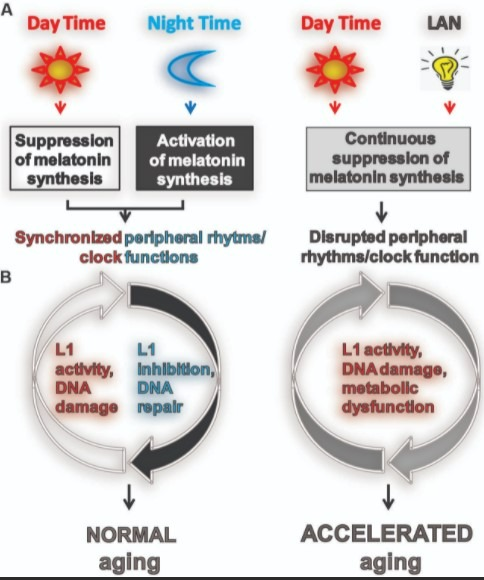
The circadian rhythm — also known as the sleep/wake cycle — is the scientific mechanism behind beauty sleep. It’s a roughly 24-hour, day/night-specific cycle that oscillates at the cellular level throughout the body.
A “master clock” located in the brain coordinates with smaller clocks in peripheral organs, working together to maintain overall health. The master clock responds primarily to light, along with other cues like exercise, food, and temperature. Once triggered, it signals peripheral organs to activate their own circadian clocks at the cellular level.
Disruption to these signals can affect physiological, metabolic, and behavioral processes — potentially contributing to conditions such as obesity, diabetes, cardiovascular disease, cancer, and accelerated aging, depending on which peripheral clock is thrown off balance.
The skin is the body’s largest peripheral organ and its outermost line of defense against the environment. In sync with the day/night cycle, skin operates on its own circadian rhythm — shifting between protection during the day and repair at night.
During the day, when skin faces the highest risk of damage from light and environmental stressors, its protective mechanisms are activated to defend against harm.
At night, the skin’s healing systems take over to repair the damage accumulated during the day.
| Hormone | When It’s Produced | Role in Skin Health |
|---|---|---|
| Melatonin | Nighttime | Facilitates skin cell regeneration and repairs UV-related cellular damage; supports production of melatonin receptors needed for daytime vitamin D synthesis |
| Human growth factor | Nighttime | Supports skin cell regeneration and repair |
| Vitamin D | Daytime (light-triggered) | Helps protect skin from UV damage and supports broader biological functions |
| Serotonin | Daytime (light-triggered) | Works alongside vitamin D to protect skin from UV exposure |
Sleeping at the right times allows this hormonal machinery to function as intended. Lack of sleep lowers melatonin levels, which prompts the body to release cortisol — a stress hormone that triggers inflammation at the cellular level. This sets off a cascade of negative effects, and repeated sleep irregularity impacts not just skin health, but overall health as well.
Under normal conditions, several skin functions follow a natural rhythm, including:
Sleep deprivation disrupts all of these processes, accelerating visible signs of intrinsic skin aging — including fine lines, uneven pigmentation, reduced elasticity, dryness, and breakouts — while also slowing the skin’s ability to recover after barrier disruption.
The National Sleep Foundation recommends 7 to 9 hours of sleep per night for most adults. Falling short of that can contribute to wrinkles, sagging skin, dark circles, and under-eye puffiness.
Research links consistent, restorative sleep to measurable skin benefits, including:
Melatonin secretion typically begins around 9:00 PM and tapers off by 7:30 AM. For maximum benefit, aim to go to bed between 9:00 and 10:00 PM.
Sleep occurs in two main phases: NREM (non-rapid eye movement) and REM (rapid eye movement). The NREM phase, which begins as soon as you close your eyes, has three distinct stages and is followed by the REM phase. These two phases cycle throughout the night, each lasting roughly 90 to 120 minutes. Skin repair and rejuvenation occur during specific stages of the NREM phase — which is why going to bed early gives your body the time it needs to complete this process naturally.
Not everyone has the luxury of a perfectly consistent sleep schedule. Shift work, travel, stress, and everyday life can throw off your circadian rhythm — and when that happens, skin’s natural nighttime repair window gets interrupted before it can finish the job.
This is the gap Monaesi’s Advanced Night Serum is formulated to close. Built around sleep cycle resynchronizing technology, it’s designed to support skin’s overnight repair processes even when your actual sleep is inconsistent or cut short — helping skin recover more effectively regardless of a disrupted circadian rhythm. For anyone whose sleep schedule doesn’t always cooperate, it offers a way to help the skin catch up on the repair work it may have missed.
Is beauty sleep actually backed by science? Yes. Sleep triggers the body’s circadian rhythm, which activates hormones like melatonin and human growth factor that repair and regenerate skin cells overnight.
How many hours of sleep do you need for healthy skin? The National Sleep Foundation recommends 7 to 9 hours per night for most adults. Getting less than this is linked to wrinkles, sagging skin, and under-eye circles and puffiness.
What is the best time to go to bed for beauty sleep? Since melatonin secretion begins around 9:00 PM, going to bed between 9:00 and 10:00 PM is considered ideal for maximizing skin repair benefits.
What happens to skin when sleep is disrupted? Disrupted sleep lowers melatonin production and raises cortisol, triggering inflammation and accelerating signs of aging such as fine lines, uneven pigmentation, reduced elasticity, and breakouts.
Can skincare help if I can’t get consistent sleep? Yes. Products like Monaesi’s Advanced Night Serum, formulated with sleep cycle resynchronizing technology, are designed to support skin’s natural overnight repair process even when sleep patterns are inconsistent.
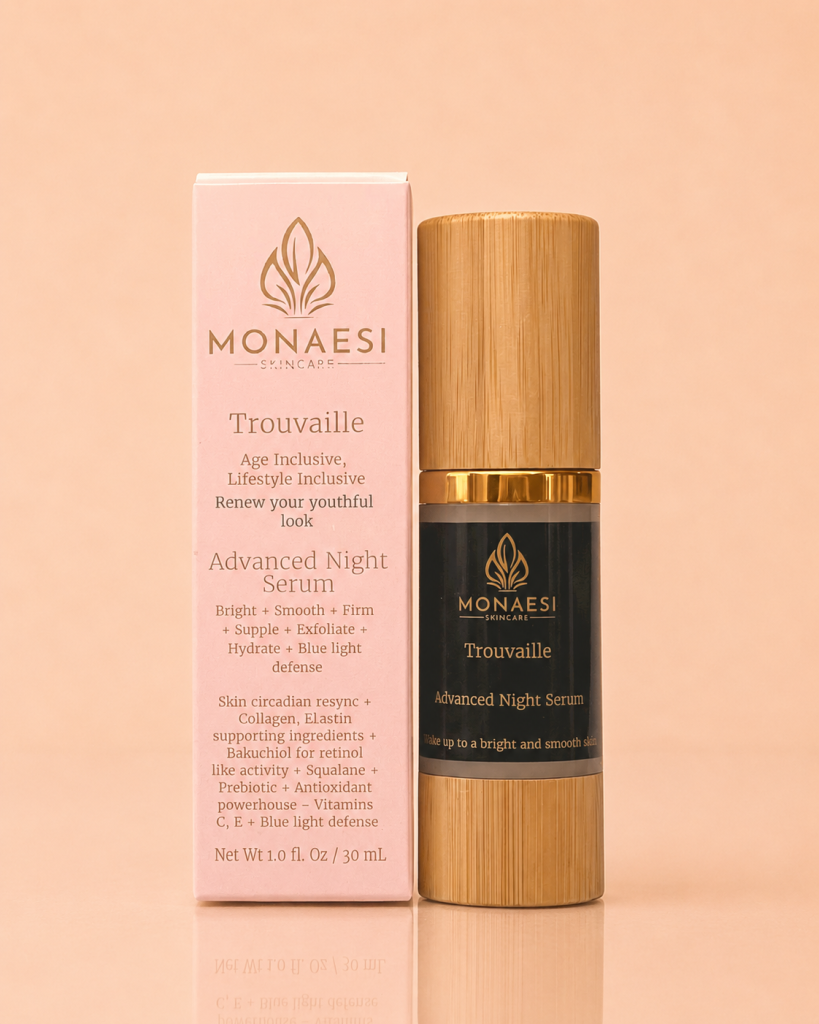
Beauty sleep isn’t just a poetic idea — it’s a measurable, hormone-driven process rooted in your skin’s circadian rhythm. Prioritizing consistent, quality sleep remains the most effective way to support long-term skin health. And on nights when that’s not possible, Monaesi’s Advanced Night Serum is designed to help bridge the gap, supporting skin repair even through a disrupted sleep cycle.
“Quality over quantity — make sure you’re not just getting hours of sleep, but quality sleep, and wake up rested, happy, and beautiful with a smile on your face.”