

Every person is unique and beautiful in their own way — and so is their skin type. This guide gives you a quick overview of the five main skin types, their physical characteristics, and simple at-home tests you can use to identify your own.
While genetics is the predominant factor behind your skin type, environmental exposure also shapes your skin’s characteristics over time. Air pollution, sun exposure, harsh chemicals in cosmetics, lack of sleep, and constant exposure to blue light from devices can all alter how your skin behaves. Sometimes, it’s simply the natural course of life.
Personally, my skin changed from oily to sensitive and dry over the years. I tried many products to manage these changes, and after a lot of trial, error, research, and lifestyle adjustments, I finally found a routine and products that my skin feels comfortable with.
There are five widely recognized skin types: dry, oily, combination, sensitive, and normal. Each has distinct characteristics and underlying causes, summarized in the table below.
| Skin Type | Key Identifying Characteristics | Common Causes |
| Dry | Flaky, scaly, rough texture; prone to early wrinkles | Constant water loss from heat, stress, and activity; high trans-epidermal water loss (TEWL); low levels of natural moisturizing factors (NMFs) such as urea, amino acids, and lactic acid that help bind water; low levels of epidermal lipids (ceramides, fatty acids, and cholesterol) that maintain a healthy skin barrier |
| Oily | Shiny, greasy skin; large pores; frequent breakouts; thicker skin; fewer wrinkles; makeup doesn’t last long; prone to comedones (whiteheads and blackheads) | High sebum production, hormonal changes and imbalances, certain medications, comedogenic makeup |
| Combination | Dry in some areas (typically the cheeks) and oily in the T-zone (nose, forehead, and chin) | Lack of lipids on the cheeks combined with high sebum production in the T-zone |
| Sensitive | Skin may turn red, sting, burn, or itch after using certain products or after sun exposure; severe cases can be painful to the touch | An underlying condition ranging from mild sensitivity to a more serious dermatological issue |
| Normal | Balanced and compatible with most products; fine pores; good blood circulation; soft, velvety texture | Naturally balanced oil and moisture production |
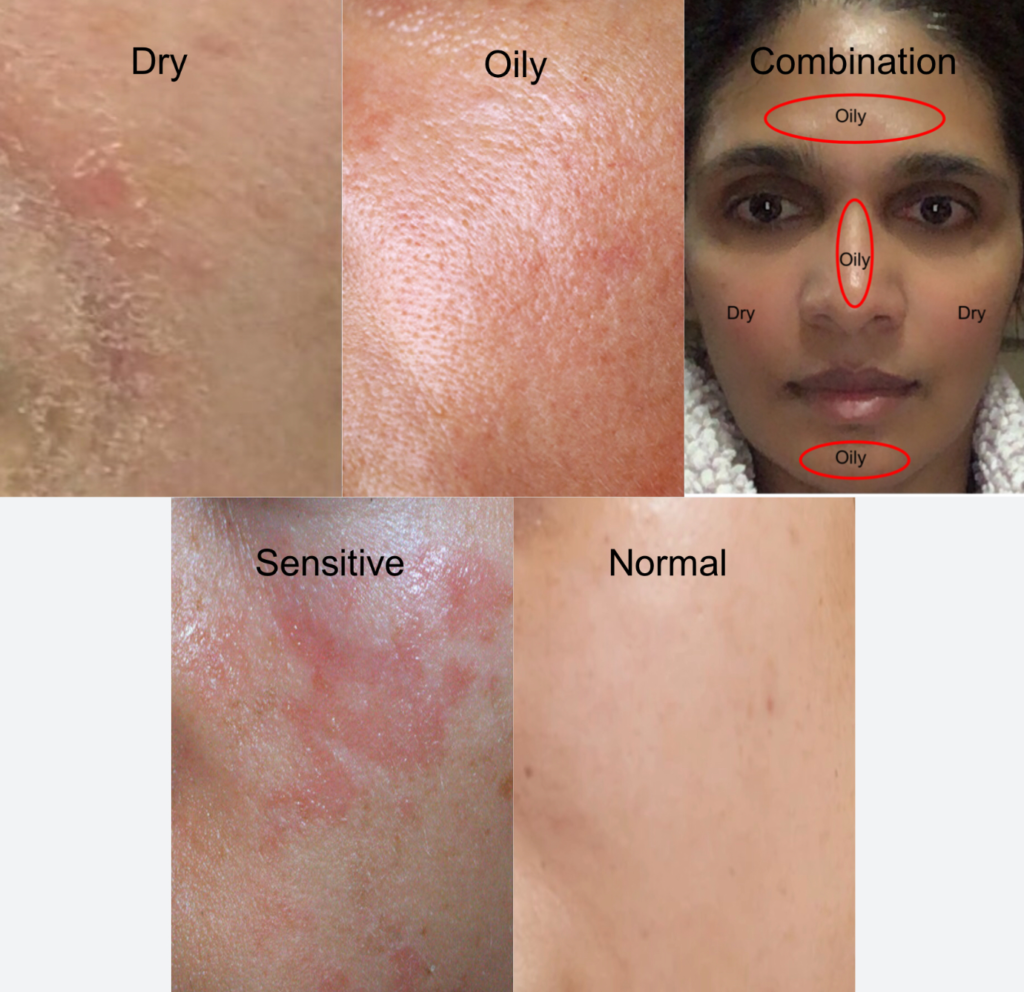
Figure 1: Different skin types. All images represent the cheek area except for combination skin, which shows both the cheek and T-zone.
You can identify your skin type at home using two simple, reliable methods: the bare-face method and the blotting-paper test.
How to read the results:
In my own experience, this method alone made it hard to pin down my exact skin type — so I recommend pairing it with the blotting-paper test below for confirmation.
How to read the results:
Dermatologists and skincare professionals often use the Baumann Skin Type Indicator (BSTI), a scientifically validated 64-item questionnaire designed to determine baseline skin type.
The BSTI evaluates four key parameters to help patients accurately self-assess their skin type, or help practitioners make personalized skincare recommendations:
What are the 5 basic skin types? The five basic skin types are dry, oily, combination, sensitive, and normal. Each is defined by how much oil and moisture the skin produces and retains.
How do I know if I have combination skin? You likely have combination skin if your cheeks feel dry while your T-zone (forehead, nose, and chin) looks shiny or oily.
What causes sensitive skin? Sensitive skin can result from an underlying condition, ranging from mild irritation to more serious dermatological issues, and often reacts with redness, stinging, burning, or itching to certain products or sun exposure.
Can my skin type change over time? Yes. Skin type can change due to genetics, hormones, environment (sun exposure, pollution, blue light), lifestyle (sleep, stress), and the products you use.
I hope this article helps you better understand and identify your skin type. Feel free to share your questions through our “Contact Us” page — we welcome your suggestions and comments any time.
Check out our next article for a full breakdown of skincare routines tailored to each skin type.
“A makeup that costs you nothing but enhances your beauty is YOUR SMILE. Keep smiling!”